Texting Etiquette When You’Re Busy at Work

When you’re busy at work, texting can feel like juggling—one slip and you might drop the ball! Keep it professional by using clear and concise messages, and ditch the slang. Set boundaries, like ‘quiet hours,’ so folks know when they can reach you. Remember to text during work hours only, respect time zones if your teammates are remote, and use proper grammar. And hey, if you stick around, you’ll pick up some more handy tips!
Understanding the Volume of Work Texts
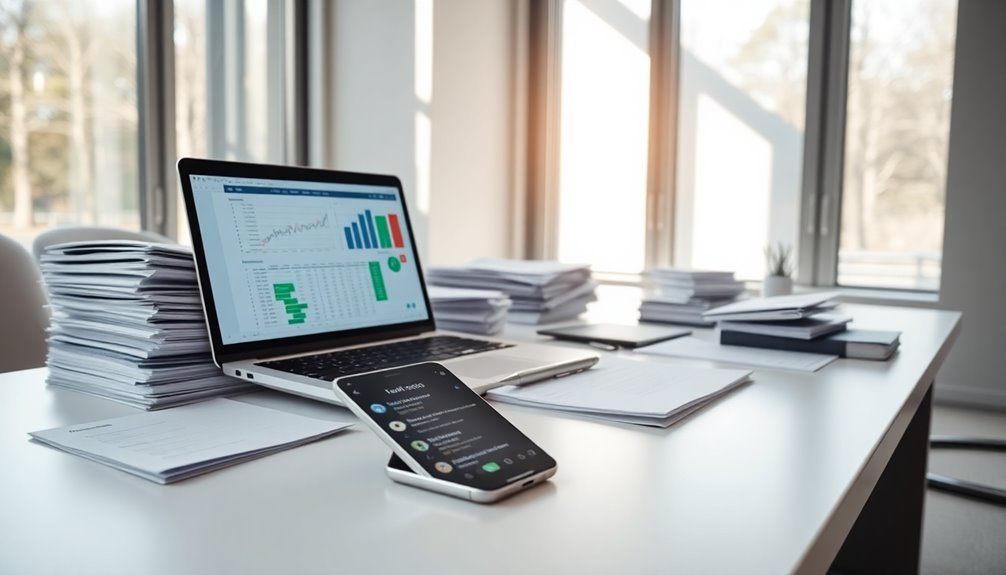
Have you ever felt like your phone’s constantly buzzing with work texts? You’re not alone! A whopping 80% of folks use texting for business, and many get bombarded with 20 to 40 messages daily.
If you’re in a fast-paced job, you might even hit 60 or more. Talk about chaotic! This constant pinging can make focusing feel like trying to find a needle in a haystack. Communication overload affects many employees, adding to the challenge of maintaining productivity.
So, what can you do? First, set specific times to check your messages. Maybe turn off notifications when you really need to focus.
And don’t forget the power of emojis—who doesn’t love a little smiley face to lighten the mood? Keep your cool, and remember: you can’t respond to everything at once!
Balancing Personal Habits and Professionalism
Texting at work can feel like juggling flaming torches while riding a unicycle—tricky and a bit overwhelming!
You want to keep things professional, but your personal habits can sneak in. Here’s how to strike that balance:
- Stick to formal language—no “LOL” or “BRB” here!
- Keep it clear and concise, so no one’s scratching their head.
- Use polite phrases like “please” and “thank you” to show respect.
- Avoid emojis unless you’re absolutely sure they fit the context.
Setting Boundaries and Timing for Texting
When you’re trying to juggle work and personal life, setting boundaries for texting can feel like a balancing act on a tightrope—one wrong move, and it all comes crashing down!
Start by telling your team when you’re available to chat. If you’re in the zone, let them know you’re busy! Use status indicators to show when you’re not up for a chat.
And hey, “quiet hours” can be a lifesaver—time to focus without the ping of distractions. When it comes to after-hours texts, keep them for emergencies only.
Trust me, your mental health will thank you! By setting clear boundaries, you’ll dodge the stress of constant messages and keep your work-life balance in check.
Upholding Professionalism and Clarity in Messages
While it might seem easy to whip out your phone and shoot off a quick text, keeping professionalism and clarity in your messages is key to avoiding a communication disaster. A jumbled message can lead to confusion, and you don’t want your boss thinking you’re on a coffee break when you’re actually deep in work!
Here are some tips to keep your texts sharp and clear:
- Use complete sentences—no one wants to guess what you mean!
- Avoid slang and shorthand; clarity’s your best friend.
- Always include necessary details, like dates and times.
- Remember to confirm important info, just to be safe.
With these tips, you’ll sound professional and help prevent any mix-ups. Happy texting!
Best Practices for Messaging Colleagues

Keeping in touch with your colleagues through text can be super handy, especially when you need quick answers or updates.
But let’s keep it classy! Text during regular work hours only—no one wants a late-night ping! Check time zones if you’re messaging someone far away; it’s just polite.
When you do text, make it clear and concise. Include all the details—like dates and times—so your message isn’t a puzzle to solve.
And please, use proper grammar; it makes you look professional! Remember to say “please” and “thank you” to keep those good vibes flowing.
Finally, be patient with replies; everyone’s juggling tasks. Texting should feel like a friendly nudge, not a frantic alarm!
Utilizing Tools and Platforms for Effective Communication
Effective communication at work can feel like juggling flaming torches—tricky and a bit scary!
But don’t sweat it; using the right tools can make a world of difference. Here’s what you can try:
- Email: It’s still king, handling 55-57% of client chats.
- Online chat platforms: Perfect for quick messages and team collaboration.
- Project management tools: Keep tasks organized and everyone on the same page.
- Video conferencing: Great for face-to-face chats, especially when working remotely.
Developing a Texting Etiquette Policy at Work
Developing a texting etiquette policy at work might sound a bit stuffy, but trust me, it can save everyone a ton of headaches!
First, set clear texting hours—let’s keep it to business hours, shall we?
Next, decide who can text and what they can say. Spoiler alert: no sharing secret stuff!
You’ll want your messages to be clear and polite, so set guidelines on tone and length.
Also, remind everyone to ask for permission before texting about work, especially for marketing.
And don’t forget to include easy opt-out options.
Finally, train your team regularly, so everyone knows the ropes.
A little planning now means fewer misunderstandings later. Plus, it keeps the workplace vibe friendly and professional!
Frequently Asked Questions
How Can I Reduce Distraction From Constant Work Texts?
To reduce distraction from constant work texts, mute notifications, set specific times for checking messages, and communicate your availability. Prioritize urgent communications while using tools that help filter and manage incoming messages effectively.
What Should I Do if a Colleague Texts Me After Hours?
If a colleague texts you after hours, assess the message’s urgency. If it’s non-urgent, consider responding in the morning. Politely communicate your boundaries to encourage a healthier work-life balance for both of you.
Are There Specific Apps Recommended for Work Texting?
Think of work texting apps as your communication lifeline. Microsoft Teams, Slack, and Google Chat enhance collaboration, while WhatsApp Business and Signal prioritize security. Choose the right app to streamline your workflow and boost productivity.
How Do I Handle Urgent Texts While in a Meeting?
When you receive urgent texts during a meeting, discreetly scan them, send quick acknowledgments, and avoid in-depth responses. Prioritize your attention on the meeting, following up thoroughly after it’s over. Stay professional and focused.
Can I Use Personal Emojis in Work-Related Texts?
You can use personal emojis in work-related texts, but be cautious. Make certain you know your company’s culture and the recipient’s preferences. Keep it professional, avoid overuse, and don’t let emojis replace clear communication.
Conclusion
So, think of texting at work like balancing a pizza on your head—one wrong move, and it all goes sideways! Remember to set boundaries, keep messages clear, and use the right tools. Stay professional, but don’t forget to keep it friendly. Everyone’s busy, so a quick “Hey, I’ll get back to you later!” goes a long way. With a little etiquette, you can keep your work texting smooth and stress-free, like a perfectly delivered pizza!